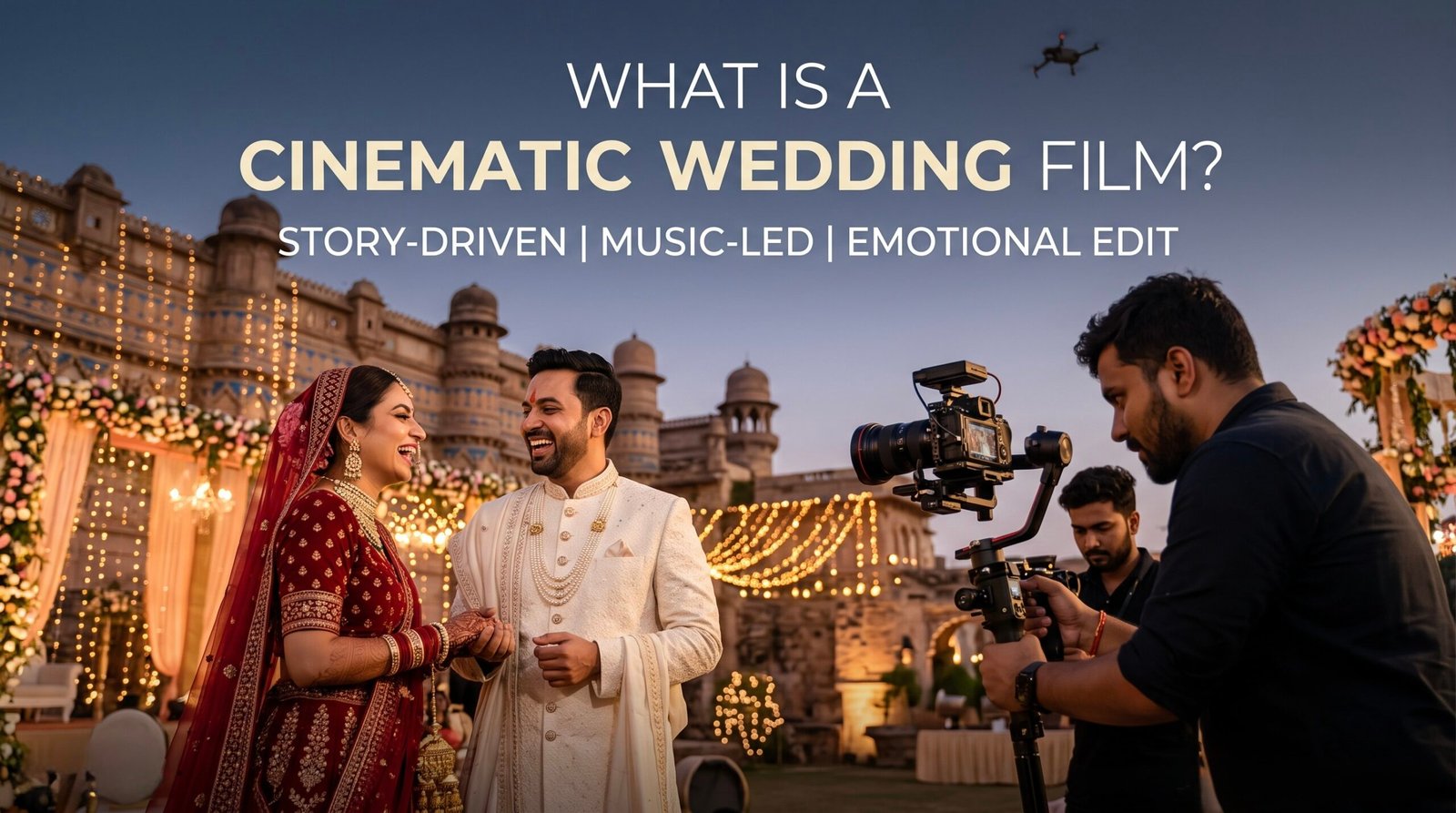
What Is a Cinematic Wedding Film (and Why Couples Are Choosing One in 2026)?
A photograph freezes a single second. A film keeps the sound of it — your grandmother’s blessing, the exact moment the music swelled, the half-laugh in your voice as you said your vows. That’s the gap a cinematic wedding film fills, and it’s why more couples in 2026 are booking one alongside their photographs. So what is it, exactly? A cinematic wedding film is a short, story-driven edit of your wedding, shot and cut like a film — with music, real audio from the day, and a deliberate narrative arc — rather than a long, continuous recording of every event in order. Think of it as a movie trailer for your love story: the most-felt moments, paced to emotion, set to a soundtrack. Capturing Vivah works in both wedding photography and filmmaking, and in this guide we’ll cover what a cinematic film actually is, how long yours should be, what it costs in 2026, and how it differs from a traditional wedding video — so you can decide what your day deserves.
What Is a Cinematic Wedding Film?
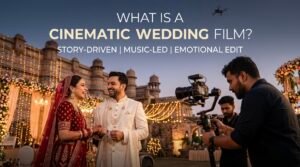
A cinematic wedding film is a short, story-driven edit of your wedding shot and cut like a film — with music, real audio from the day, and a deliberate narrative arc, rather than a long, chronological recording of events. It’s the most-felt moments of your day, paced to emotion and set to a soundtrack. Filmmakers describe it as movie-style storytelling built on music, sound bites, and often drone footage, distinct from a straight, continuous video.
Cinematic film vs traditional wedding video
A traditional video documents events end to end, in order, at length — useful as a complete record of the ceremony and speeches. A cinematic film condenses the day into its strongest moments and may even time-shift between them for impact. The real difference is creative editing and pacing — music, transitions, and a story structure — versus a plain recording. Both have a place; they just do different jobs.
What makes a film feel “cinematic”?
Three things, mostly. First, movement — smooth camera motion from gimbals, sliders, and sometimes a drone, so the day flows rather than sits still. Second, light and colour — shooting for mood and then grading the footage so it looks filmic rather than flat. Third, sound — layering real audio, like your vows or a heartfelt line from a speech, under a carefully chosen music track so the emotion actually lands. Get those right and even simple footage feels like a film; get them wrong and the most expensive camera in the world still looks like a home video.
How Long Should a Cinematic Wedding Film Be?
Most cinematic wedding films run between three and ten minutes, with around five minutes being the most common “highlight” length and eight to ten minutes making a fuller, immersive cut. Longer feature or documentary films — covering the full ceremony and speeches — typically run twenty to thirty minutes or more. There’s no fixed industry standard; what matters is matching length to how you’ll actually watch and share it. As a rule, shorter films get rewatched far more often.
The ranges bear this out: eight to ten minutes is widely considered the sweet spot for an immersive highlight reel, while the industry standard for cinematic films tends to land between five and nine minutes, with documentary cuts stretching to thirty minutes and beyond.
Highlight film vs feature film
A highlight film — roughly three to five minutes — is the shareable, emotional trailer, perfect for social media and quick rewatches. A feature or documentary cut — around fifteen to thirty minutes — lets moments breathe: more of the vows, more speeches, more of your guests. Many filmmakers deliver both, pairing a short highlight with a longer film so you get the best of each.
Pro Tip: Decide where the film will live before you choose a length. If it’s mainly for Instagram and the family WhatsApp group, a tight one-to-five-minute cut will out-perform a beautiful twenty-minute film almost no one finishes.
How Much Does a Cinematic Wedding Film Cost in 2026?
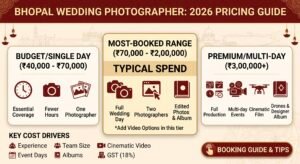
In 2026, a cinematic wedding film in India typically costs between about ₹80,000 and ₹2,50,000 per day, depending on crew size, the number of cinematographers, drone usage, and the depth of editing. Smaller, single-camera coverage sits at the lower end; multi-camera teams with drone work and elaborate post-production sit higher. As with photography, more events and more footage mean more shooting and more edit time — and that’s the single biggest driver of the final figure.
That benchmark is consistent across the market: a cinematic wedding film commonly falls in the ₹80,000–₹2,50,000 per-day range, scaling with crew, drone, and editing requirements.
Does booking photo and film together cost less?
Often, a little. Many studios price a combined photo-and-film package below the sum of the two booked separately, because the teams share planning, travel, and a single timeline. Just as importantly, one coordinated crew means your photographer and cinematographer aren’t quietly competing for the same angle in the same moment. If you want both, ask for a combined quote and compare it honestly against standalone pricing.
What you’re paying for in post-production
A film’s magic is mostly made in the edit. Colour grading, sound design, syncing real audio to picture, and shaping a genuine story arc take days of skilled work per film. That craft — not just the day’s shoot — is what separates a cinematic film from a folder of raw footage. A good editor is also a quiet storyteller, choosing which glance to hold on, where to cut to your mother’s face, and when to let the music breathe. It’s invisible work when it’s done well — which is exactly why it’s worth asking to see a filmmaker’s finished films, not just clips from the shoot.
Why Are More Couples Choosing Cinematic Films in 2026?
Because a still freezes a moment, but a film keeps it moving and breathing. The 2026 trend is unmistakable — there’s strong demand for cinematic wedding films, AI-assisted editing workflows, and immersive storytelling. Couples increasingly want both a timeless album to hold and a film they can simply press play on for years.
It shines brightest at destination weddings
Sweeping landscapes, palace courtyards, sea-facing mandaps — these settings are made for motion. If you’re marrying somewhere with a view, a cinematic film earns every rupee. Aerial shots gliding over a hilltop fort, or a slow push across a candle-lit courtyard, simply can’t be captured in a single still — movement is the whole point. If you’re still choosing where, our guide to the top destination wedding venues in India is a lovely place to start dreaming.
A cinematic edit also rewards couples who let their personalities show. Rimjhim and Harshal praised the out-of-the-box creativity of their shoot with us — and that kind of inventiveness is exactly what a film is built to showcase, in a way a single frame sometimes can’t.
How to Get the Most From Your Wedding Film
Brief your team on the three or four moments that matter most to you, keep some real audio in mind — your vows, a parent’s blessing, a friend’s speech — and then trust the edit. The footage is only half of it; the choices made afterwards are what turn a day into a story. For how we structure film and photo coverage together, our FAQs walk through exactly what to expect.
One more thing worth doing: share a song or two you love, or simply describe the feeling you want the film to carry — romantic, fun, understated, grand. Filmmakers can’t always license a specific commercial track, but knowing the mood you’re after helps them choose music that fits the two of you rather than a default template.
Conclusion: Press Play on Your Day, Years From Now
Three takeaways to carry with you. A cinematic wedding film is a short, music-led, story-driven edit — not a long recording. Most run three to ten minutes, with longer feature cuts for couples who want everything kept. And in 2026, expect roughly ₹80,000 to ₹2,50,000 per day depending on crew and post-production. The real reason to invest isn’t the footage — it’s hearing your day again, exactly as it felt. If you’d like to see how your story could be told on film, let’s talk about it.